
The History of BTC Mining: A Journey Through Time
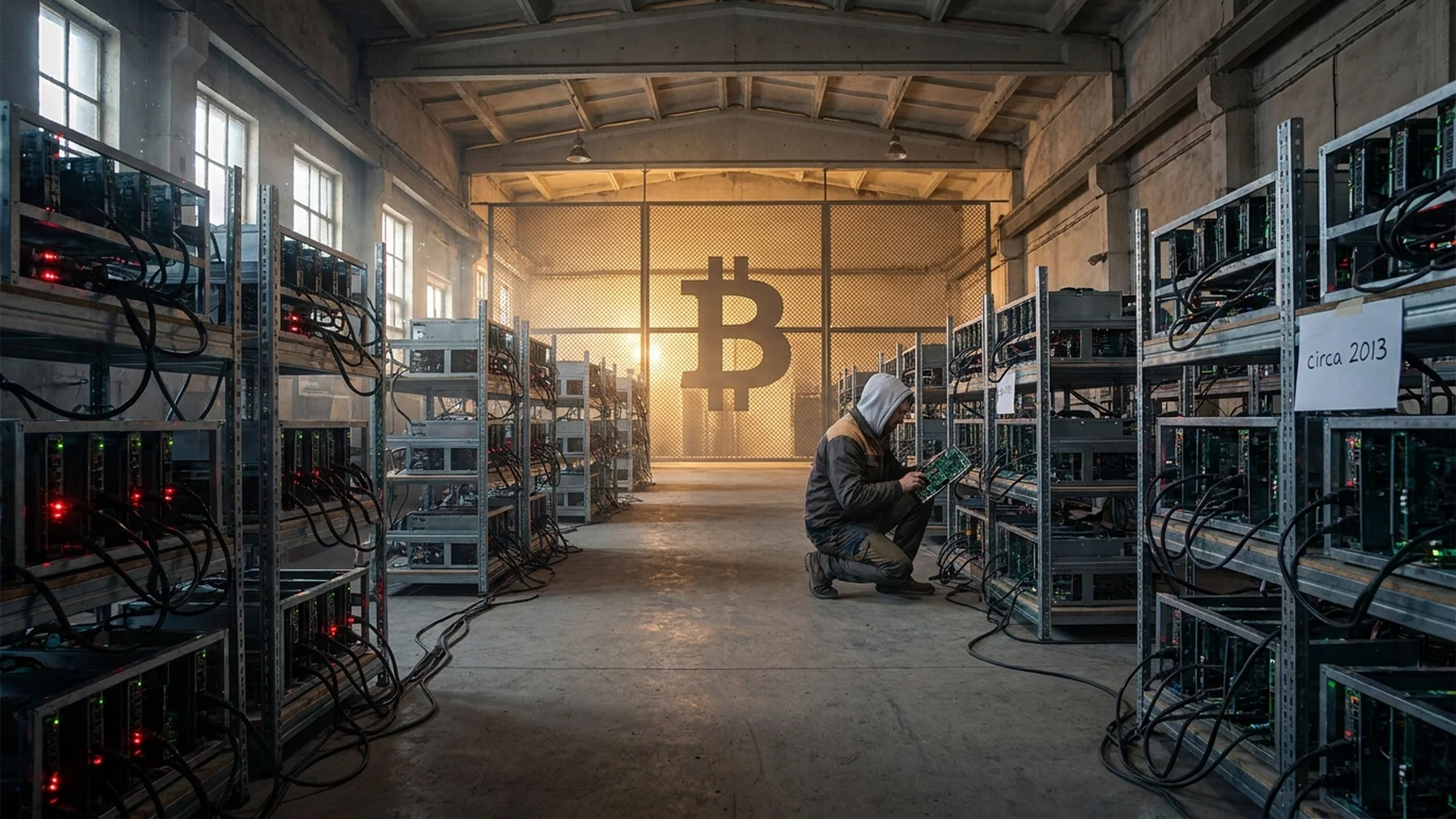
The history of BTC mining is a fascinating journey that intertwines with the rise of Bitcoin from an obscure idea to a global phenomenon. This exploration delves into the milestones that have shaped Bitcoin mining and the broader crypto ecosystem, from the creation of the Genesis Block to the technological advances and environmental challenges that define the industry today.
The Genesis Block: The Birth of BTC Mining
The story of BTC mining begins with the Genesis Block, created on January 3, 2009. This was the first block mined by Bitcoin's mysterious creator, Satoshi Nakamoto. The block's code contained the message: "The Times 03/Jan/2009 Chancellor on brink of second bailout for banks," highlighting Bitcoin's purpose as a decentralized, inflation-resistant currency.
Bitcoin Mining Evolution: From CPUs to ASICs
In the early days, Bitcoin mining was done using regular CPUs. As Bitcoin gained popularity, mining difficulty increased, leading to a shift towards GPU mining. Eventually, ASICs (Application-Specific Integrated Circuits) became the standard, drastically improving mining efficiency.
Here's a look at the evolution of Bitcoin mining hardware:
- CPUs: Initially used for mining, but quickly became inefficient.
- GPUs: Provided a more powerful solution, enhancing mining capabilities.
- FPGAs: Offered flexibility and better performance than GPUs, but were short-lived.
- ASICs: Custom-built for mining, offering unmatched efficiency and speed.
Early BTC Transactions and the First Commercial Use
Bitcoin transactions were initially rare and experimental. A landmark moment came on May 22, 2010, known as Bitcoin Pizza Day, when programmer Laszlo Hanyecz paid 10,000 BTC for two pizzas. This marked Bitcoin's first commercial use, emphasizing the role of miners in transaction validation.
Hal Finney and the Early Bitcoin Pioneers
Hal Finney, a renowned cryptographer, was one of the first to adopt Bitcoin. In 2009, he received the first Bitcoin transaction from Satoshi Nakamoto. Finney's early involvement was crucial in proving Bitcoin's viability and shaping BTC mining's future.
Environmental Concerns and the Future of BTC Mining
BTC mining requires substantial energy consumption, leading to growing environmental concerns. The industry now focuses on sustainable practices, using renewable energy sources like solar and wind power. Here are some key practices being considered:
- Adopting solar and wind power to reduce carbon footprints.
- Utilizing hydroelectric energy for environmentally friendly operations.
- Implementing more efficient mining hardware to decrease energy usage.
Technological Milestones: SegWit, Taproot, and the Lightning Network
Technological upgrades have significantly influenced Bitcoin's development. Segregated Witness (SegWit) was implemented in 2017 to increase transaction capacity and improve mining efficiency. The Taproot upgrade in 2021 enhanced privacy and scripting abilities. Additionally, the Lightning Network emerged as a second-layer solution, facilitating faster and cheaper transactions.
The Rise of Bitcoin Maximalism and Forks
As Bitcoin grew, debates about its future direction led to the emergence of Bitcoin maximalism, the belief in Bitcoin's superiority over other cryptocurrencies. Disagreements resulted in forks like Bitcoin Cash and Bitcoin SV, which aimed to address transaction speed and scalability, impacting mining practices.
Bitcoin Mining in the Era of Bitcoin City and El Salvador
Recently, Bitcoin has gained national-level recognition, with El Salvador adopting it as legal tender in 2021. President Nayib Bukele's vision for Bitcoin City—a hub for Bitcoin innovation and mining—highlights the growing acceptance of BTC mining. This move positions El Salvador as a pioneer in leveraging Bitcoin for economic growth.
The Role of Satoshi's Units and BTC Dust
As Bitcoin's value increased, Satoshi's units became crucial for smaller transactions. A Satoshi is one hundred millionth of a Bitcoin. BTC dust refers to tiny Bitcoin amounts often unspendable due to high fees. Understanding these concepts is vital for grasping Bitcoin transactions and the mining economy.
The history of BTC mining is marked by innovation and evolution. From the Genesis Block to Bitcoin's national recognition, advancements in technology and discussions on sustainability continue to shape its future. As Bitcoin's popularity grows, the story of BTC mining will undoubtedly continue to evolve with new chapters and innovations.